Two Church of England parishes in the Anglo-Catholic tradition

St Paul’s with FleetWEYMOUTH

ABOUT US

Our Faith

The Christian faith, received through the ages. A life of worship, sacrament and service.

We believe that God has come to meet us in Jesus Christ. He calls us into friendship with himself, gathers us into his Church, and offers us a life that reaches beyond death.

God created us to know and love him, and ultimately to share in his own happiness. This friendship begins here on earth through his grace and finds its fulfilment in heaven, where we shall see him face to face. Through his love, we become his children and are given the grace to live as such.

“Charity is a certain friendship of man with God.”

— St Thomas Aquinas, Summa Theologiae, II–II, q. 23, a. 1

At St Paul's Weymouth and Holy Trinity Fleet, we live this faith within the Church of England and its Anglo-Catholic tradition. Worship draws us closer to God, the sacraments nourish our life in Christ, and his love bears fruit in the way we care for one another and the world around us.

The Faith of the Church

One God. A life shared with us.

The Apostles' and Nicene Creeds express the faith Christians have received and professed for centuries. They tell us who God is, what he has done for us, and the hope he has given us.

Here we set out the Catholic faith as we believe and practise it within our Anglo-Catholic tradition.

Father, Son and Holy Spirit

We believe in one God: Father, Son and Holy Spirit. Three Persons, yet one God, united in one divine life and love.

The Father creates and sustains all things through the Son and in the Holy Spirit. The Son became man to save us, and the Holy Spirit lives and works within us, making us holy and drawing us closer to God.

Every human being is made in God's image and is precious to him. We are created to love God, to love one another, and to care for the world he has entrusted to us.

Because every human being is made in God's image, we believe that all human life is sacred and must be cherished and protected, from conception to natural death. We therefore uphold the sanctity of life, rejecting abortion and assisted suicide, and affirm our duty to care for the most vulnerable and defenceless with compassion, dignity and love.

Jesus Christ, our Lord and Saviour

Jesus Christ is the eternal Son of God, truly God and truly man. Conceived by the Holy Spirit and born of the Virgin Mary, he entered our human life and shared our human condition.

In his teaching, compassion and healing, we see the love of God. But Jesus came to do more than teach us how to live. By becoming one of us, he opened the way for us to share in God's own life.

Through his death on the Cross and his bodily Resurrection, Christ overcame sin and death and reconciled us to the Father. He calls us to turn away from sin, receive his forgiveness and follow him.

Risen from the dead and ascended into heaven, he continues to pray for us and will come again in glory.

The Church and the sacraments

The Church is more than a gathering of people who share the same beliefs. She is the Body of Christ, united to him as her Head and given life by the Holy Spirit.

Christ continues to work through his Church, especially through the sacraments. These are not merely symbols or religious ceremonies. They are gifts through which God truly acts, giving us his grace, strengthening our faith and drawing us closer to himself.

In our Anglo-Catholic tradition, we cherish the seven sacraments of the Church:

  • Baptism, through which we are united to Christ and become members of his Church.
  • Confirmation, in which we are strengthened by the gift of the Holy Spirit.
  • The Eucharist, in which Christ gives us his Body and Blood as our spiritual food.
  • Confession, in which we receive God's forgiveness and are reconciled to him.
  • Anointing of the Sick, through which Christ brings his grace, strength and comfort to those who are seriously ill or approaching death, preparing them for their final journey into his presence.
  • Holy Orders, through which bishops, priests and deacons are ordained to serve Christ and his Church.
  • Holy Matrimony, in which the love and lifelong commitment of husband and wife are blessed and strengthened by God's grace.

Through these sacraments, Christ accompanies us throughout our lives, from Baptism to our final journey towards him.

Resurrection and everlasting life

Our hope rests in the risen Christ. We believe that death is not the end and that, just as Christ rose bodily from the tomb, we too shall rise. The Christian hope is not simply that our souls will live on after death. We believe in the resurrection of the body: that, at the end of time, God will raise us to a new and glorified life, body and soul reunited.

But our greatest hope is something even more wonderful: to see God face to face. The Church calls this the beatific vision, the perfect happiness of being with God for ever.

Throughout our lives, we are constantly searching for beauty, goodness and truth. We find glimpses of them in nature, art, music, friendship, love and the world around us. Yet even our greatest joys never quite satisfy us for ever. There is always something more we long for, something that no earthly happiness can completely fulfil.

Often without even realising it, what we are truly searching for is God himself, the source of all beauty, goodness and truth. Everything good and beautiful in this world reflects something of him, but nothing created can take his place.

St Augustine expressed this longing in the opening of his Confessions:

“You have made us for yourself, O Lord, and our heart is restless until it finds rest in you.”

— St Augustine, Confessions, I, 1

We also believe that those who have died in Christ remain united to us in his love. We remember them with affection, commend them to God's mercy and continue to pray for them.

The universal Church personified in a manuscript-style miniature

Anglican and Catholic

Rooted in the whole Church

The word Catholic means universal. It reminds us that the Christian faith does not belong to one country, culture or generation. It is the faith handed down from the apostles, shared by Christians throughout the world and passed on through the centuries. We have not invented this faith for ourselves. We have received it as a gift, and we seek to hand it on faithfully.

As Anglo-Catholics, we cherish the Church of England's place within this wider Christian inheritance. We believe that our worship unites us not only with Christians throughout the world, but also with the saints in heaven and the Church of every age. Our faith is therefore both deeply personal and wonderfully shared.

Scripture and living Tradition

God has made himself known to us most fully in Jesus Christ, his eternal Word made flesh.

The Bible, inspired by the Holy Spirit, tells the story of God's love and saving work. We read it, hear it proclaimed in worship and seek to live by its teaching.

But we do not read Scripture as though the Christian faith began with us. We read it within the living Tradition of the Church, guided by the faith of the apostles, the wisdom of the early Christians and the witness of the saints.

Apostolic faith and ministry

From the time of the apostles, the Church has been served by bishops, priests and deacons.

We believe that this ordained ministry is a gift from Christ to his Church. Bishops are called to guard the faith and care for the Church; priests celebrate the sacraments, preach the Gospel and care for God's people; deacons proclaim the Gospel and serve the Church and the wider community.

Their ministry is more than a set of duties. Through them, Christ continues to teach, guide and care for his people. In the sacraments, it is Christ himself who acts through his ministers.

St Paul's belongs to The Society, under the patronage of Saint Wilfrid and Saint Hilda, and receives the pastoral care of the Bishop of Oswestry. We uphold the traditional understanding of the male priesthood and episcopate, while praying and working for the visible unity of all Christians.

The Heart of Our Life

Christ meets us in the Mass

At the altar, the Church is drawn into Christ's offering of himself to the Father.

The Eucharist

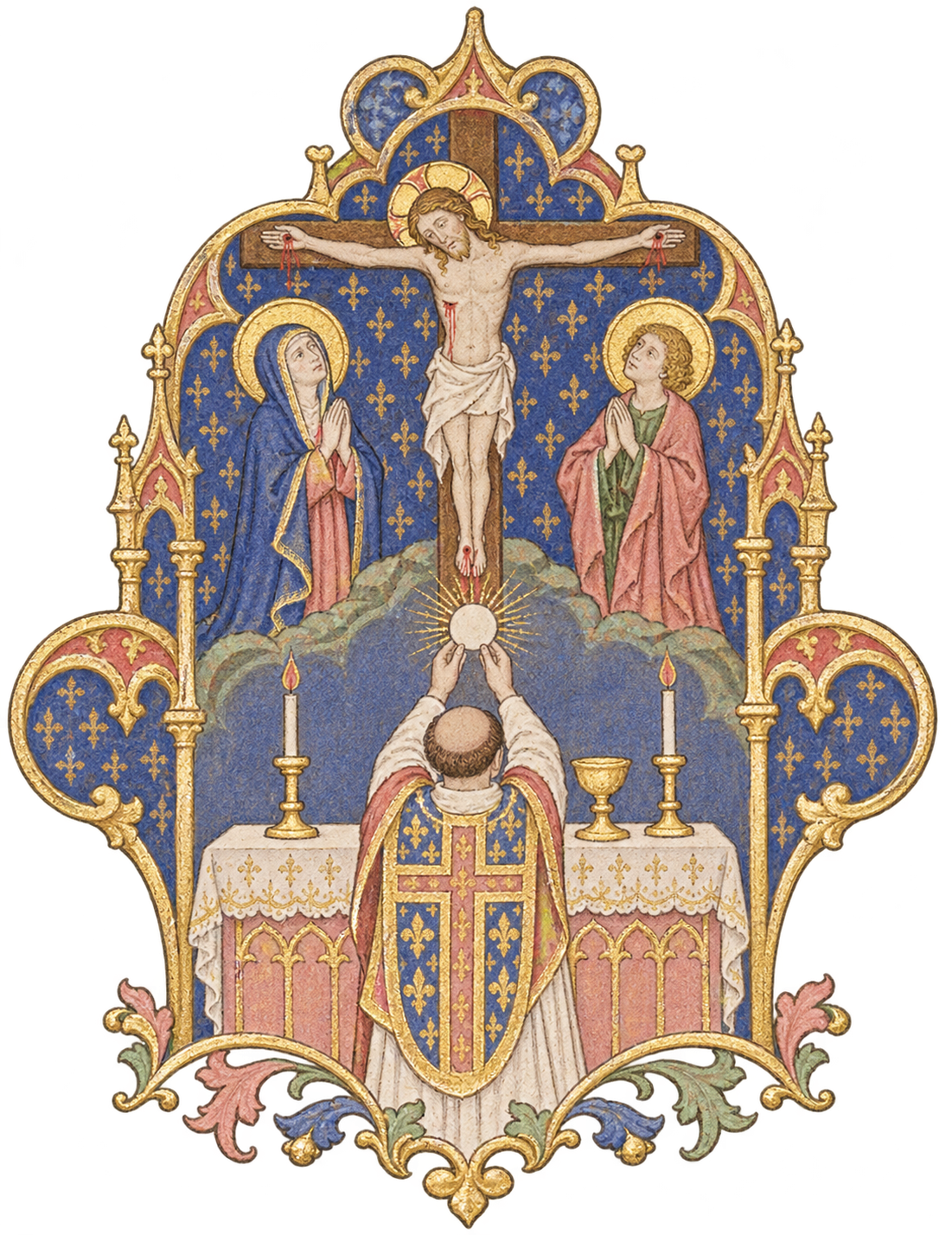
A manuscript-style miniature relating the Crucifixion and the Mass

The Mass, also called the Eucharist or Holy Communion, stands at the centre of our parish life.

It is not simply something we do for God. Above all, it is what Christ does for us and invites us to share in.

Jesus offered himself completely to the Father through his death on the Cross. In the Mass, that one perfect sacrifice is made present to us in a sacramental way. It is not repeated: Christ's sacrifice on Calvary was offered once and for all.

Christ is both the Priest who offers and the sacrifice that is offered. United to him, the Church joins in his perfect worship of the Father.

We hear God's word, pray for the world, give thanks for his gifts and offer him our own lives, with all their joys, sorrows, hopes and struggles.

The worship of heaven and earth

The Mass is never simply the worship of one congregation gathered in one building.

At every Mass, we join the worship of heaven. With the angels and saints, and with the whole Church throughout the world, we give praise to God.

When we sing Holy, Holy, Holy, we join the song of the heavenly hosts. The altar becomes a meeting place of heaven and earth, where we are drawn into the worship of eternity.

This is why the Mass is at once so solemn and so joyful. We are welcomed into something far greater than ourselves.

The Real Presence

At the heart of the Mass is the extraordinary gift of Christ himself.

We believe that Jesus Christ is truly present in the Blessed Sacrament. Through the consecration, the bread and wine become his Body and Blood, although their outward appearance remains unchanged.

This is not merely a symbol or a reminder of someone who lived long ago. It is Christ himself, risen and living, who gives himself to us.

St Thomas Aquinas expressed this mystery in the Eucharistic hymn traditionally attributed to him, Adoro te devote:

“Sight, touch and taste are deceived concerning thee, but by hearing alone is faith securely established.”

Our senses still perceive what looks, feels and tastes like bread and wine. Faith, however, trusts the words of Christ: “This is my Body”; “This is my Blood.”

We therefore approach the altar with faith, reverence, adoration and thanksgiving.

Adoration and Benediction

Our devotion to Christ in the Blessed Sacrament does not end when Mass is over.

In Eucharistic Adoration, we spend time in prayer before Christ present in the consecrated Host. We may speak to him, reflect upon his love, or simply remain quietly in his presence.

At Benediction, the Blessed Sacrament is solemnly displayed and the people receive Christ's blessing.

These moments of prayer invite us to be still, to turn our attention towards God and to rest in his presence.

The Beauty of Holiness

The English Missal and High Mass

Words, music, silence and movement come together in the worship of God.

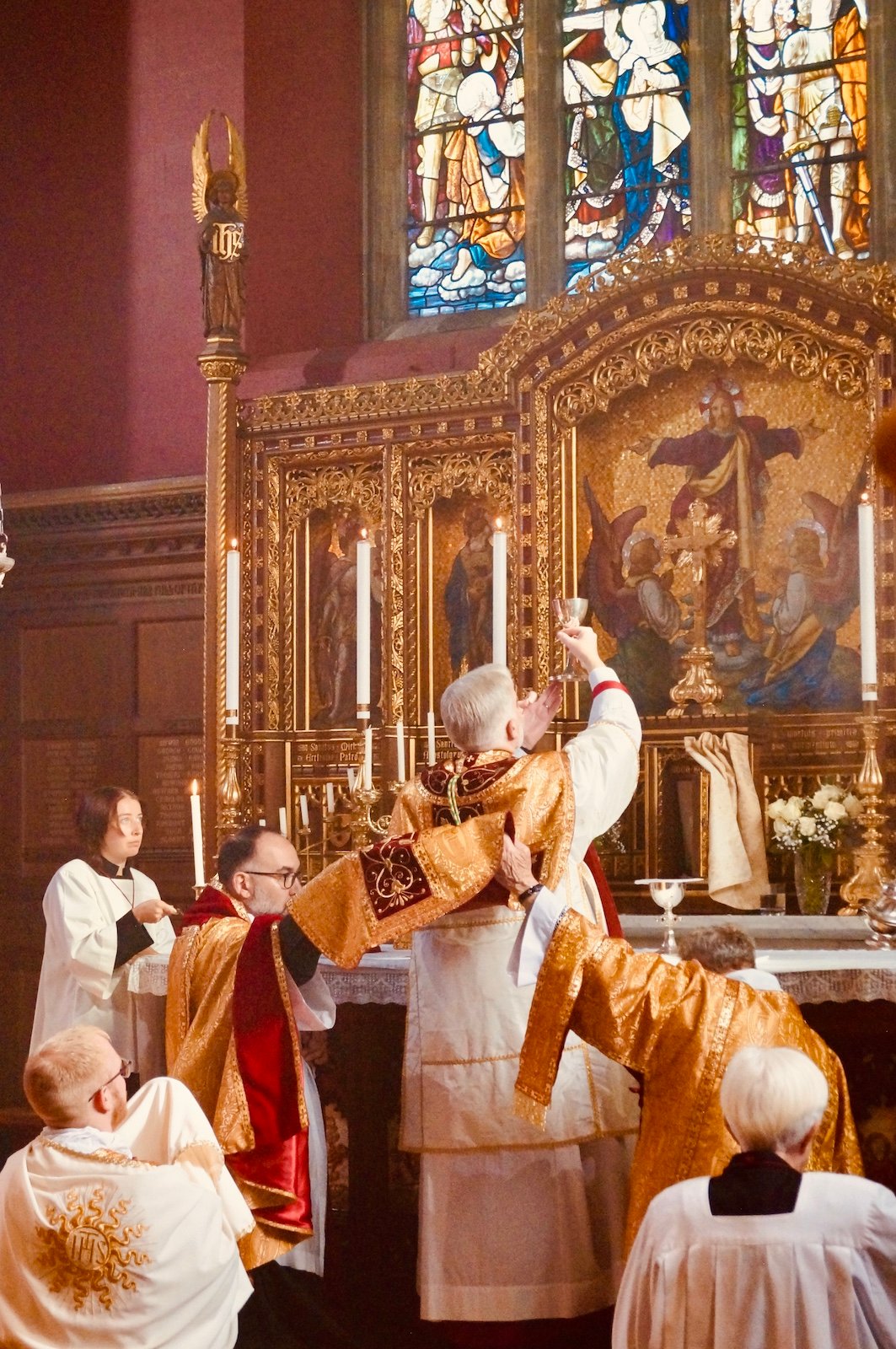
Parish liturgy at St Paul’s

The English Missal

The English Missal holds a cherished place in our liturgical life.

It is an English rendering and adaptation of the traditional Roman Missal, whose prayers and central forms of worship have developed over more than 1,500 years, incorporating language and texts from the Book of Common Prayer. It allows us to worship in the ancient Western Catholic tradition while preserving something of our distinctive Anglican heritage.

Its prayers and readings lead us through the Christian year, from Advent and Christmas to Lent, Easter and Pentecost, and through the feasts of Our Lady and the saints.

These words have been shaped by centuries of prayer. They give us a language in which to worship God, even when we struggle to find words of our own.

The liturgy is not something we invent according to our personal tastes or feelings. We receive it from the Church as a precious inheritance. Its words, gestures and silences gradually teach us how to pray.

We do not come to worship simply to express what we already feel. We come to be formed by the prayer of the Church and drawn more deeply into the mystery of God.

High Mass

High Mass is the solemn celebration of the Eucharist, enriched by sacred music, incense, ceremonial and the ministry of servers. In its traditional fullest form, the priest is assisted by a deacon and subdeacon.

Chant, hymns, the organ, vestments, candles and incense all have their place. None is intended merely to make the service more impressive. Together, they help direct our attention towards God and express the importance of what is taking place.

The congregation participates through singing, responses, listening, prayer and attentive silence.

But taking part in the Mass means more than having something to say or do. Above all, it means allowing ourselves to be drawn into Christ's offering to the Father, uniting our hearts and lives to his.

Beauty that leads to God

Why do we use beautiful vestments, candles, incense, music and ceremonial? Because God is worthy of our very best, and because beauty can help us recognise something of his truth and glory.

The beauty of worship is not meant to draw attention to itself. It points beyond itself, towards God.

The light of candles reminds us of Christ, the light of the world. Incense rising towards heaven recalls our prayers ascending to God. Sacred music gives voice to praise, while silence allows us to listen and adore.

Our bodies also have a part to play. We worship not only with our minds and hearts, but with our whole selves. We kneel in adoration, stand in reverence, bow in humility and make the sign of the Cross as a reminder that we belong to Christ.

You are welcome to take your time

You do not need to understand everything about the Mass before coming to worship with us. You may be a lifelong Christian, someone returning to church after many years, or someone who has never attended a service before. You are welcome to come, watch, listen, pray and discover. Our service sheets will help you follow what is happening, and there is always someone happy to explain anything unfamiliar. If you have questions about receiving Holy Communion, please speak to the priest.

A Faith to Live

From the altar into daily life

The Christian faith is not something we leave behind when we walk out of church.

Being a Christian means that Christ lives and works within us through his grace, gradually changing our hearts and helping us to become more like him. Our prayer, our kindness, our forgiveness and our service to others are all meant to grow from this life with Christ.

Prayer through the year

The Church's year helps us to live within the story of Christ.

Advent prepares us for his coming. At Christmas, we celebrate the wonder of God becoming man. Lent calls us to repentance and a renewed life of prayer. Holy Week brings us to the foot of the Cross, and Easter fills us with the joy of the Resurrection. At Pentecost, we celebrate the coming of the Holy Spirit.

The feasts of Our Lady and the saints remind us that God's grace has been at work in the lives of countless people, in every age and place. As we give thanks for their lives and example, they pray for us to God in heaven.

By following the Christian year, we learn to see our own lives in the light of Christ's life, death and Resurrection.

Mary and the communion of saints

We honour the Blessed Virgin Mary as the Mother of God and the mother given to us by Christ.

In her, we see what God's grace can accomplish in a human life. Her trust, humility and faithfulness show us how to respond to God's love. We ask her prayers as we seek to follow her Son.

We also honour the saints, whose lives reveal the many different ways in which God's grace can transform ordinary human beings.

The saints were not all alike, nor were they all without faults or struggles. They came from different backgrounds, lived in different circumstances and faced different difficulties. Yet each, in a particular way, allowed the love of Christ to shine through.

We believe that the saints are alive in Christ and remain united to us in the communion of his Church. We ask their prayers, learn from their example and rejoice that we belong to the same family of God.

Mercy, generosity and service

Our worship of God must find expression in the way we treat others.

The love we receive from Christ is meant to become visible in our lives: in forgiveness, patience, generosity, compassion and practical care.

We are called to recognise Christ especially in those who are poor, lonely, sick, forgotten or in need.

Christian service is therefore more than simply doing good deeds. It is a way of loving Christ himself in our neighbours.

Through our parish life, charitable work and community activities, we seek to put this faith into practice in Weymouth and Fleet.

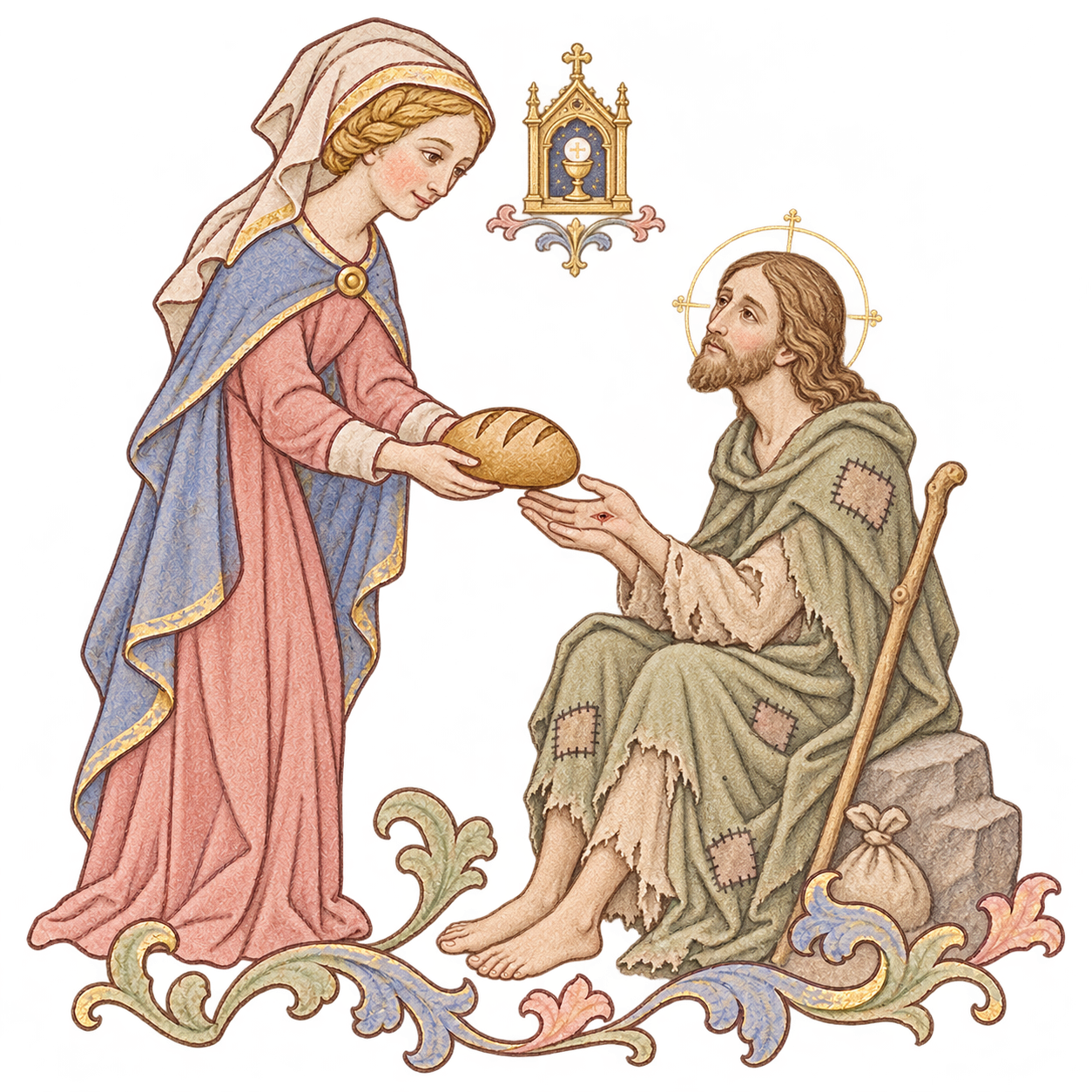
The Mass sends us out into the world to live what we have celebrated at the altar. As Bishop Frank Weston (+1924) said, we cannot truly worship Jesus in the Tabernacle while ignoring him in the poor and suffering.

Christ recognised in a person receiving an act of charity

Come and See

Whether you have worshipped for many years, are returning to church or are just beginning to ask questions about God and the Christian faith, there is a place for you here. You do not need to have all the answers. Faith often begins with a question, a moment of wonder, or simply a desire to discover whether there is something more. We invite you to come and see, to share in our worship and to discover the life Christ offers to us all.

Plan your first visitSpeak to the vicar