
ABOUT US · HISTORY & HERITAGE
Fleet
Two churches. One parish history.
Fleet’s two churches stand only a short distance apart, but they tell different chapters of the same story. The small medieval chancel near the lagoon recalls the village before the great storm. The tower of the newer Holy Trinity marks the rebuilding of parish life further inland.
THE CHURCH BESIDE THE FLEET
The surviving medieval chancel
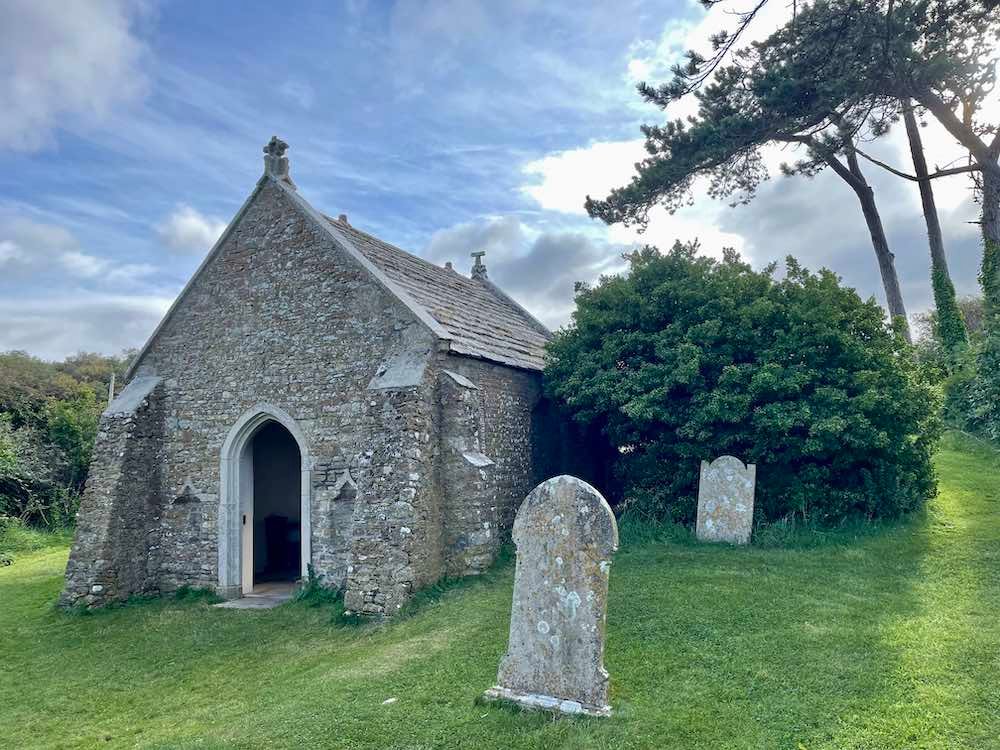
A church at Fleet appears in the Domesday record of 1086. The building that survives at the end of Butter Street is later: its chancel is medieval, generally dated to the fifteenth century. It was once part of a larger parish church dedicated to the Holy Trinity.
Today its modest size can be misleading. What looks like a complete little chapel is the eastern part of a church whose nave has disappeared. The churchyard and the surviving walls preserve the old village’s place of worship beside the Fleet.
Rubble-stone walls, a stone-slab roof and crosses on the gables give the building its simple outline. Blocked windows in the side walls are traces of its earlier fabric. Inside, the timber roof and family monuments preserve more of its long history.
DESTRUCTION AND REBUILDING
The storm that changed Fleet
The great storm of November 1824 devastated the village and badly damaged its church. The response changed both the building and its place in the landscape.
- November 1824The old church damaged
The storm destroyed houses and left the church’s nave severely damaged. The parish faced the task of rebuilding after a disaster that had affected the whole community.
- 1827The chancel preserved
The nave was demolished. The chancel was repaired and closed with a new west wall, allowing it to remain in use as a mortuary chapel.
- 1827–1829A new site inland
The Revd George Gould funded a new church, designed by Strickland, around 540 yards north-north-west of the old one.
- 1829Holy Trinity consecrated
The new building became the parish church. The old chancel remained, so that Fleet’s earlier church was preserved alongside its successor.

A GEORGIAN GOTHIC CHURCH
Holy Trinity, built inland
The “new church” is now almost two centuries old. Built between 1827 and 1829, it belongs to the Georgian period’s revival of Gothic architecture. Its pointed windows, battlements and pinnacles give a small village church a distinctive presence.
The building has ashlar stone walls and slate roofs. Its three-stage west tower leads into a single nave, with a chancel and polygonal sanctuary beyond. The plan is compact, but the treatment of the windows, ceilings and sanctuary gives it considerable richness.
Holy Trinity is listed at Grade I. The old church is listed separately at Grade II*. Both received their listings on 26 January 1956, recognising the importance of two very different survivals within one parish.
CRAFTSMANSHIP AND CONTINUITY
Inside Holy Trinity
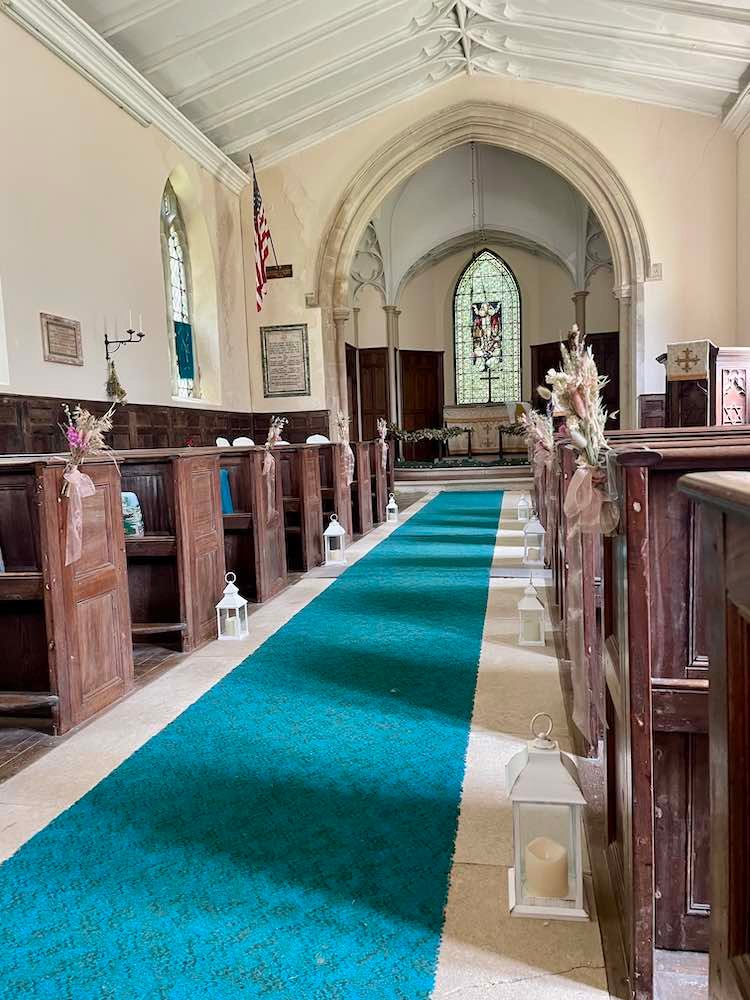
The nave’s light plaster ceiling is divided into decorative panels. Beyond the broad chancel arch, slender shafts and ribbed plaster vaulting frame the sanctuary. The east window places the Resurrection of Christ at its centre.
A white marble memorial in the chancel commemorates John Gould, who died in 1818. Its sculpted figures gather around an urn, bringing a different, classical artistic language into the Gothic interior.
The new church also received communion plate from its predecessor. The Royal Commission recorded a cup and cover-paten dated 1664, together with other older silver. These objects carried something of the old church’s worship into the rebuilt church.
READING THE BUILDINGS
Two plans, two chapters
The Royal Commission’s 1952 inventory recorded both churches. These historic plans show the contrast between the surviving rectangular chancel of the old church and the tower, nave and sanctuary of its nineteenth-century replacement.

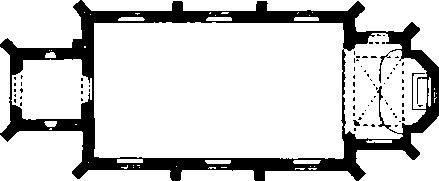
Plans: Royal Commission on Historical Monuments (England), An Inventory of the Historical Monuments in Dorset, Volume I: West (HMSO, 1952), p. 109, via British History Online.
PEOPLE REMEMBERED
Family, literature and wartime service
The Mohun monuments
The old church contains monuments associated with the Mohun family, including memorials dated 1603 and 1612 and a later monument to Francis Mohun, who died in 1711–12. Their inscriptions, heraldry and carved figures preserve the memory of people connected with Fleet long before the storm.
Fleet and Moonfleet
J. Meade Falkner’s Moonfleet, published in 1898, gave this landscape a lasting place in English literature. The old church features in the story, and a commemorative plaque there recalls the author. The novel adds an imaginative history to the real history of the church and village.
An American connection
Holy Trinity is the memorial church of the US Army’s 383rd Engineer Battalion (Separate), later the 1349th Engineer General Service Regiment. Stationed at Fleet in 1943–44, the unit prepared engineering works for D-Day before serving in north-west Europe. The American flag inside the church recalls this connection.

ONE PARISH, TWO INHERITANCES
What has endured
Fleet’s churches make its history unusually visible. The old chancel preserves medieval stonework and the memorials of earlier generations. The new Holy Trinity records the determination to rebuild after the storm, while retaining a connection with the church it replaced.
Seen together, the two buildings tell a story of loss, preservation and renewal. Each belongs to the history of the village; neither can be fully understood without the other.
Sources and photograph credits
- Wikipedia: Fleet Old Church and Holy Trinity Church, Fleet — historical starting points.
- Historic England: Old Parish Church and Parish Church of the Holy Trinity — dates, listed status, architecture and monuments.
- Royal Commission inventory, 1952, pp. 109–110 — building descriptions, communion plate and historic plans. Plans reproduced from the original HMSO publication via British History Online.
- Dorset Churches: Fleet — local history and the American engineers’ connection.
- Church and monument photographs: © Weymouth St Paul with Fleet, from the parish’s new church and old church galleries. Photograph dates are not recorded in the gallery captions.